 James Nieh, Professor of Biological Sciences & Associate Dean of Biological Sciences
jnieh@ucsd.edu
View
CV
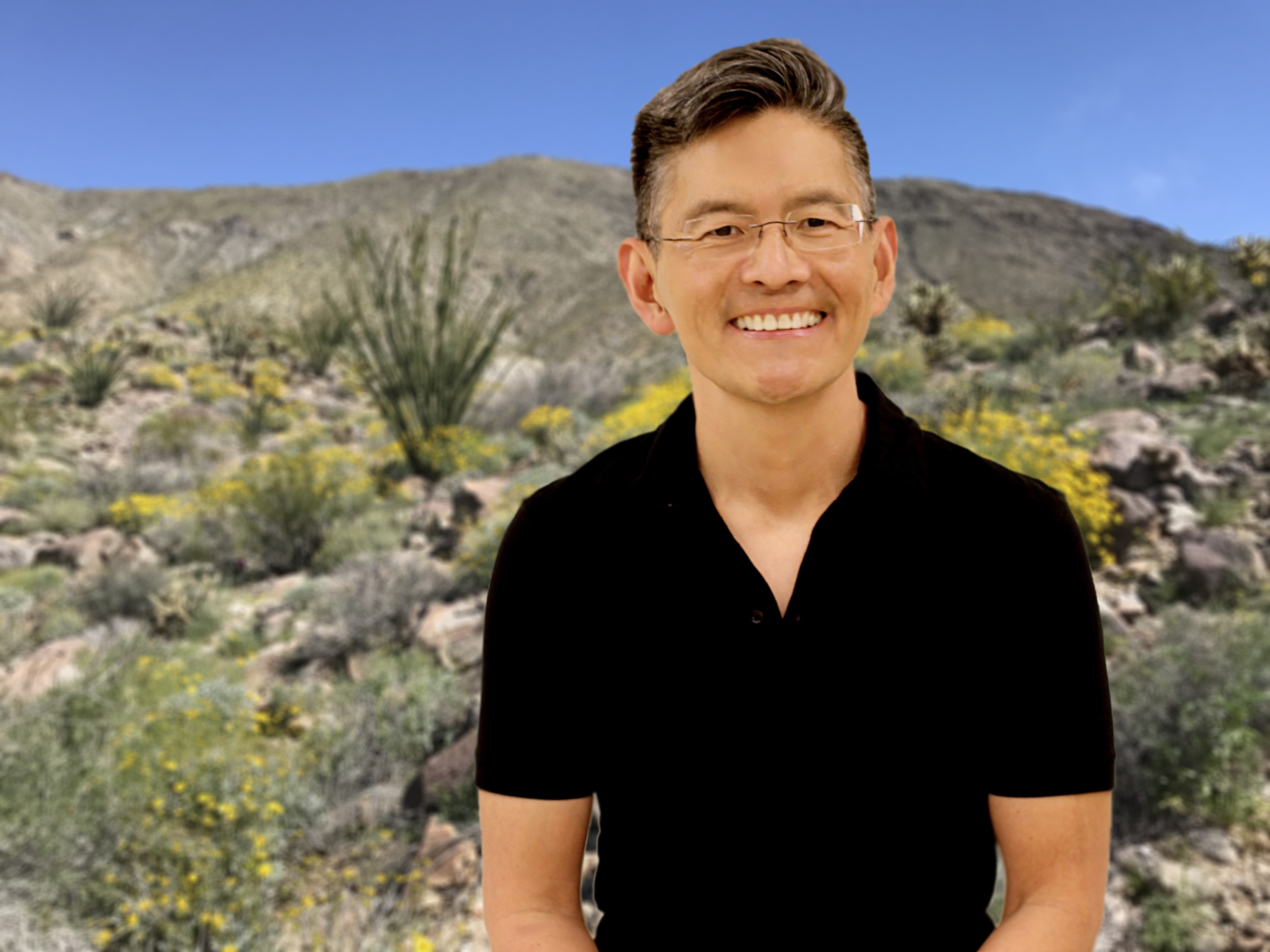
James Nieh is interested in the evolution of communication in social bees and factors that influence honey bee health. He focuses on the proximate mechanisms involved in foraging, food alertment, and recruitment in the social bees (Bombini, Apini, and Meliponini). His goal is develop a greater understanding how such foraging systems work and what selective pressures have shaped the evolution of foraging communication. His second major focus is on the effects of pesticides and pathogens on honey bee behavior and health.
 Joseph Byrd, MS candidate
Candidate
Joseph Byrd, MS candidate
Candidate
2025 to 2026
jbyrd@ucsd.edu
Joseph is interested in studying honey bee social learning, specifically how honey bees may be able to learn floral odors carried by waggle dancers.
 Emily Lippman, MS candidate
Candidate
Emily Lippman, MS candidate
Candidate
2025 to 2026
elippman@ucsd.edu
Emily is studying the origins of heat balling defensive behavior in honey bees and how odors can be used to decrease honey bee aggression.
 Aria Loduca, PhD candidate
2020 to current
floduca@ucsd.edu
Aria is studying how omega-3 fatty acids, essential nutrients for bees, can improve honey bee survival and olfactory learning, after bees are exposed to sublethal doses of pesticides. Aria earned her MS in the lab in December 2021.
 Brandi Sanchez, MS
2023 to current
brsanche@ucsd.edu
A prediction of the honey bee waggle dance learning hypothesis is that bees need to learn the dance to better cope with an unpredictable environment, including the naturally irregular dance floor.Brandi is testing this hypothesis.
Former Lab Members
 Hannah Griesmer, MS candidate
Candidate
Hannah Griesmer, MS candidate
Candidate
2024 to 2025
hgriesmer@ucsd.edu
Hannah studied immune priming of honey bee queens and how to repeatedly measure pathogen infection levels in the same bee without harming the bee.
 Ashley Kim, PhD candidate
Candidate
Ashley Kim, PhD candidate
Candidate
2020 to 2025
ask002@ucsd.edu
View
CV
View her website
Ashley is interested in how honey bee can adapt to changing daily food availability and focused on the shaking signal, a signal that appears to help regulate daily colony activity.
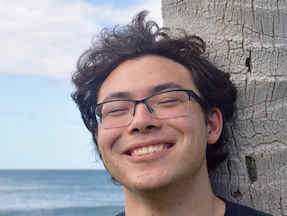 Kevin Kubo, BSMS candidate
2021 to 2022
kkubo@ucsd.edu
Kevin studied the efficacy of a light-based treatment for bees exposed to pesticides.
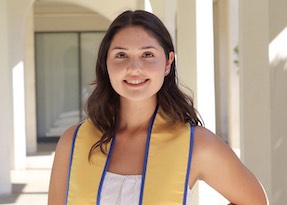 Anngely Leeds, BSMS candidate
2021 to 2022
acleeds@ucsd.edu
Anngely studied heat and cold tolerance of feral and managed honey bees in Southern California.
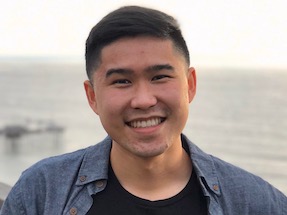 Brandon Mukogawa, BSMS candidate
2021 to 2022
bmukogaw@ucsd.edu
Brandon studied the hygienic behavior in feral and managed honey bees in Southern California, focused on how feral colonies can thrive despite being given no treatments against a major parasite, Varroa destructor.
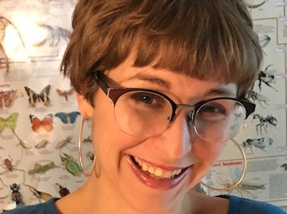 Amy Geffre, MS
2018 to 2021
ageffre@ucsd.edu
View
Google Scholar Page
Amy studied honey bee viruses and the health of Africanized and managed honey bees.
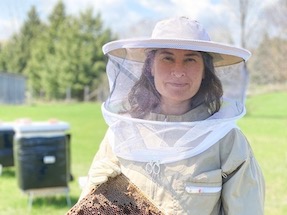 Heather C. Bell, Postdoctoral Fellow & Staff Research Associate
2013 to 2018
hebell@ucsd.edu
View
CV
Heather Bell studied properties of dyadic social interactions in a variety of species during her PhD in Canada, and is now studying honey bee inhibitory communication to better understand how inhibitory signaling shapes colony dynamics.
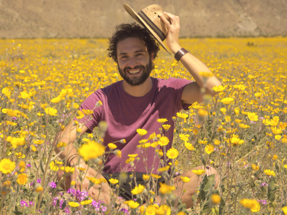 Simone Tosi, Postdoctoral Fellow & Visiting Scholar
2016 to 2019
tosi.biology@gmail.com
Simone is interested in the effects of multiple factors on bee health, focusing on the role of pesticides, nutrition, Nosema, and their interactions. He studied how environmental stressors affect honey and solitary bee survival and behaviours, including flight, locomotion, phototaxis, thermoregulation, and energy levels. Dr. Tosi is currently a faculty member at the University of Turin.
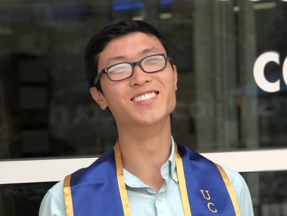 Edmund Lau, Master's
Candidate
Edmund Lau, Master's
Candidate
2018 to 2020
edmundlau94@gmail.com
Edmund studied the effects of Nosema ceranae infection on the honey bee microbiome, focusing on the effects of colony background on bee mortality and infection levels.
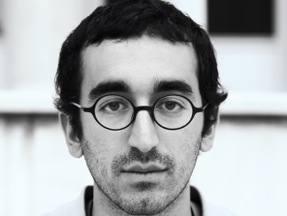 Bahram Kheradmand, PhD
Candidate
Bahram Kheradmand, PhD
Candidate
2014 to 2019
bkheradm@ucsd.edu
View
CV
Bahram studied how honey bees use landmarks and distance estimation to find food sources and how honey bees are capable of sophisticated sequence learning, a form of statistical learning.
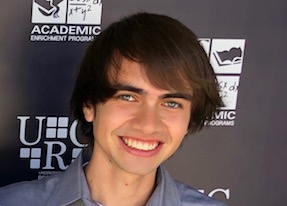 Joshua Ludicke, MS
2018 to 2019
jludicke@ucsd.edu
Joshua studied honey bee visual learning.
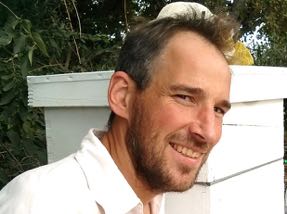 Harmen P. Hendriksma, Staff Research Associate
2016 to 2019
harmenhendriksma@gmail.com
Harmen is interested in studying honey bee health, with emphases on nutrition and natural compounds that can enhance bee defenses against infection.
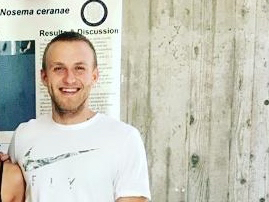 Andrey Rubanov, MS Candidate
2016 to 2017
andrey_rubanov@yahoo.com
Andrey studied how immune priming provides protection against Nosema infection in adult bees and the effects of Nosema infection on the honey bee gut microbiome.
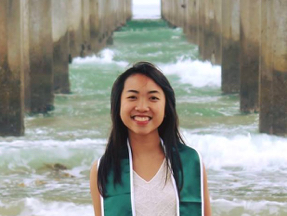 Linda Tong, MS Candidate
2016 to 2017
litong@ucsd.edu
Linda studied the effects of pesticides on honey bee flight ability.
 Alex Neskovic, Master's
Candidate
Alex Neskovic, Master's
Candidate
2015
aneskovi@ucsd.edu
Alex studied ways to boost honey bee immunity against infections by the pathogen, Nosema ceranae.
 Lindsay Goldasich, MS
2015 to 2016
lindsayisderight@gmail.com
Lindsay studied how the neonicotinoid pesticide, imidacloprid, affects the ability of honey bees to avoid predation. She is interested in the broader implications of how xenobiotics affect the food web by cognitively impairing the decisions of prey.
 Jennifer Hayward, MS
2016
s0908487@sms.ed.ac.uk
Jennifer studied the effects of pesticides on honey bee nectar foraging and recruitment behavior.
 Chase James, MS Candidate
2011 to 2016
chasejames10@gmail.com
Chase tested the toxic pheromone hypothesis, focusing on how a potentially toxic pheromone may provide a honest signal of fighting superiority in the obligate cleptoparasitic Lestrimelitta nitkib.
 Aggelina Kanellopoulous, Master's
Candidate
Aggelina Kanellopoulous, Master's
Candidate
2015
aggelina.kanellopoulou@gmail.com
Aggelina studied the effects of pesticide on honey bee phototaxis and locomotion.
 Erica Zhang, Master's
Candidate
Erica Zhang, Master's
Candidate
2012 to 2014
erzhang@ucsd.edu
Erica studied the effects of neonicotinoid pesticides on honey bee learning.
 Matt Endler, Master's
Candidate
Matt Endler, Master's
Candidate
2012 to 2014
mendler@ucsd.edu
Matt studied how honey bee larvae can be infected with Nosema ceranae and how honey bee immune systems can be activated to resist such infection.
 Antoine Lecocq,
Phd candidate visiting from the University of Copenhagen
Antoine Lecocq,
Phd candidate visiting from the University of Copenhagen
2014
antoine@plen.ku.dk
Antoine studied the effect of Nosema ceranae infection on honey bee social behaviors.
 Lee BenVau, Master's
Candidate
Lee BenVau, Master's
Candidate
2011 to 2013
leebenvau@gmail.com
Lee studied the links between an egg precusor protein, vitellogenin, which is associated with honey bee longevity, health, and immune function and the ability of bees to resist pollutants such as pesticides.
 Spencer Huey, Master's
Candidate
Spencer Huey, Master's
Candidate
2011 to 2013
sdhuey@ucsd.edu
Spencer has been
a Master's student in the Nieh Lab since 2011. He studied how honey bees and native bee pollinators respond to insect and spider predators.
 Allison Bray, Master's
Candidate
Allison Bray, Master's
Candidate
2011 to 2013
abray@ucsd.edu
Allison has been
a Master's student in the Nieh Lab since 2011. Her work examined how honey bees detect and avoid predators while foraging on flowers.
 Kyle Burks, Independent
Researcher
Kyle Burks, Independent
Researcher
2009 to 2013
kyleburks@gmail.com
Since
2009, Kyle studied the function of bumble bee labial gland
secretions inside and outside the nest. Labial glads secretions play an
important role in stingless bee recruitment, but its function in bumble
bees is not known.
 Tobin Hammer, Independent
Researcher
Tobin Hammer, Independent
Researcher
2007-2008
hammert@uci.edu
Tobin Hammer studied honey bee thermal learning. He is currently a faculty member at UC Irvine.
 Daren Eiri, MS, Independent Researcher
2007 to 2013
deiri@ucsd.edu
View CV
Daren Eiri has
been involved in the lab since 2007 and originally worked on bumble bee
acoustic recruitment. His Master's research focused on the
sublethal effects the pesticide, imidacloprid, on honey bee foraging
behavior. Daren graduated from UCSD in 2009 with a B.S. in Ecology,
Behavior and Evolution and received his Master's in Biology in 2011. He also studied how Nosema infection affects the development of honey bee larvae.
 Meg Eckles, PhD
Candidate
Meg Eckles, PhD
Candidate
2004 to 2012
meg.eckles@gmail.com
View
CV
Meg joined the lab in 2004 while she was an undergraduate, and began UCSD's PhD program in 2005. Her work focuses on cognition in bumblebees, how stingless bee use optic flow to measure distance and height, and testing functionally referential communication in the stingless bee Melipona panamica. Her previous work has included behavioral thermoregulation in yellowjackets (Vespula pennsylvanica). Her general research interests include cognition, learning and behavioral ecology of wasps and stingless bees. Meg graduated from UCSD in 2005 with a Bachelor of Science degree in Environmental Systems: Ecology, Behavior and Evolution. She received her PhD from the Division of Biological Sciences at UCSD in 2012. In 2016, Meg became an Assistant Professor of Biology and the Director of Biotechnology at Southwestern College.
 Eben Goodale,
Visiting Scholar
Eben Goodale,
Visiting Scholar
egoodale@ucsd.edu
View
CV
Eben joined the lab in 2010 as an ornithologist excited about the possibilities of working with social insects. Eben's research focuses on interspecific communication and its effect on community ecology. His past work has focused on alarm calling and vocal mimicry in mixed-species bird flocks, mostly in Sri Lanka. In the Nieh lab, Eben focused on interspecific information exchange about foraging between honey bees and bumble bees. In 2012, he began a new faculty position in China. For more details see his website.
 Ralph Tyler Jack McCollough, MS
2009 to 2012
tjack@ucsd.edu
Tyler was been
a Master's student in the Nieh Lab since 2009. He graduated in 2012. His work focused on aversive learning and inhibitory signaling in honey bees and demonstrated that attacks from natural honey bee predators can elicit a signal that inhibits waggle dancing, the stop signal.
 Brian Park, MS
2009 to 2012
brpark@ucsd.edu
Brian Park is a former Masters student (graduated in 2012)
studying seasonal influences on honey bee foraging in a semi-urban setting to determine what pollen resources, native and introduced, are important to bees throughout the year. He used genetic barcoding of collected pollen to identify the plants visited and the honey bee dance language to determine where bees have foraged.
 Elinor Lichtenberg,
PhD
Elinor Lichtenberg,
PhD
2005 to 2011
elichten@ucsd.edu
View CV
Elinor joined the Nieh lab in 2005. Her thesis research focuses on use of heterospecific scent marks (olfactory eavesdropping) by stingless bees. General research interests communication, foraging behavior, social information use, aggression and competition. As an undergraduate, Elinor studied a visual communication system in stalk-eyed flies (Cyrtodiopsis whitei) in the lab of Dr. Jerry Wilkinson. Prior to beginning UCSD's PhD program, she participated in an internship at the National Zoo in Washington, D.C., seeking to improve captive kori bustard (Ardeotis kori) breeding success through behavioral research. Elinor obtained her Bachelor of Science (Biology: Behavior, Ecology, Evolution and Systematics) from the University of Maryland, College Park in 2003.
 Jessica Hagbery,
MS
Jessica Hagbery,
MS
2009 to 2011
jhagbery@ucsd.edu
Jessica studied foraging division of labor in bumble bees (Bombus impatiens), focusing on how individuals and colonies adapt to the loss of pollen foraging specialists. She demonstrated that generalist foragers could adaptively shift their preferences and collect significantly more pollen after pollen foraging specialists were removed and showed that these same generalists reverted to their original preferences when pollen specialists were restored.
 Eduard Deneke,
visiting MS student
Eduard Deneke,
visiting MS student
2010
eduard.deneke@googlemail.com
Eddie studied bumble bee foraging and alarm activation.
 Brian Johnson,
former Postdoctoral Fellow
Brian Johnson,
former Postdoctoral Fellow
2008 to 2009
brnjohnson@ucdavis.edu
View website information
Brian is currently a Professor in the Department of Entomology at UC Davis where he uses honey bees as a model system to examine multiple questions in the areas of Behavioral Ecology and Behavioral Genetics.
 Dan Su,
MS
Dan Su,
MS
2006 to 2009
dan.kn.su@gmail.com
Dan studied foraging and alarm activation in the bumble bee, Bombus impatiens.
 Traci Kitaoka,
MS
Traci Kitaoka,
MS
2006 to 2008
tkimikok@gmail.com
Traci studied how pollen odor can activate bumble bee pollen foraging.
 Michelle Renner,
MS
Michelle Renner,
MS
2005 to 2007
michelle.a.renner@gmail.com
Michelle studied bumble bee olfactory information flow and contact based foraging activation.
 Constantine Lau,
MS
Constantine Lau,
MS
2005 to 2007
lau.constantine@gmail.com
Constantine studied the proximate causes of an inhibitory signal, the stop signal, in honey bees.
 Felipe Contrera,
former Postdoctoral Fellow
Felipe Contrera,
former Postdoctoral Fellow
2005 to 2006
felipe@ufpa.br
View website information
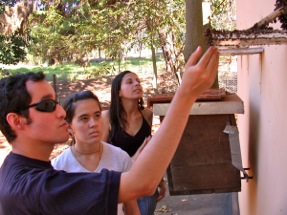
Felipe is currently an Associate Professor at the Universidade Federal do Pará in Belém, Brazil, where he studies the highly social bees, focusing on stingless bees as model systems. His research interests include Behavioral Ecology, Animal Communication, and Meliponiculture.
 Katherine Mapalad,
MS
Katherine Mapalad,
MS
2004 to 2006
kmapalad@gmail.com
Katherine studied the effect of pollen protein quality on bumble bee thoracic temperatures.
 Nik Sadler,
MS
Nik Sadler,
MS
2003 to 2005
Nik studied the effect of honey bee recruitment motivation on forager thoracic temperatures.
 Hien Nguyen,
MS
Hien Nguyen,
MS
2003 to 2005
henry6@gmail.com
Hien studied the foraging activation in the bumble bee species, Bombus occidentalis.


