Our lab studies the stressors, natural and man-made, that affect honey bees. Graduate students, undergraduates and high school students are directly involved in our research. Donations are handled by UCSD, a 501(c)(3) non-profit (96% of funds go directly to support research). Please visit the UCSD online donation website. If you have any questions, please email jnieh@ucsd.edu
Every gift makes a difference. When we pool your gift with others, together we can make a greater impact in saving vital honeybee colonies, educating our community and advancing scientific research.Thank you for your support!
If you are considering making a greater, lasting impact through giving, please contact James Nieh at jnieh@ucsd.edu


What your gifts help support
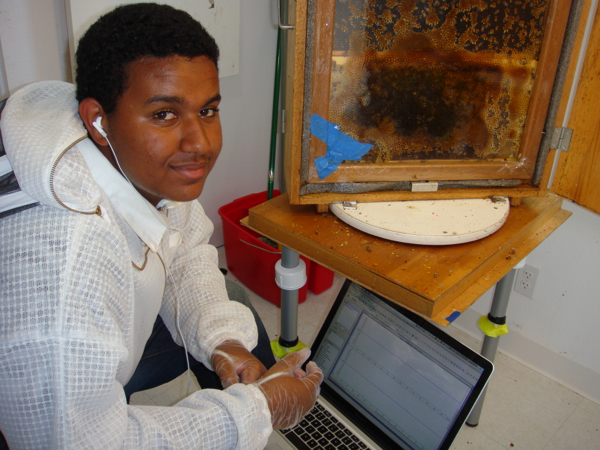
TRiO Upward Bound High School student, Jonathan Russom, studying the vibrational force and amplitude of natural honey bee stop signals. (August 2013)
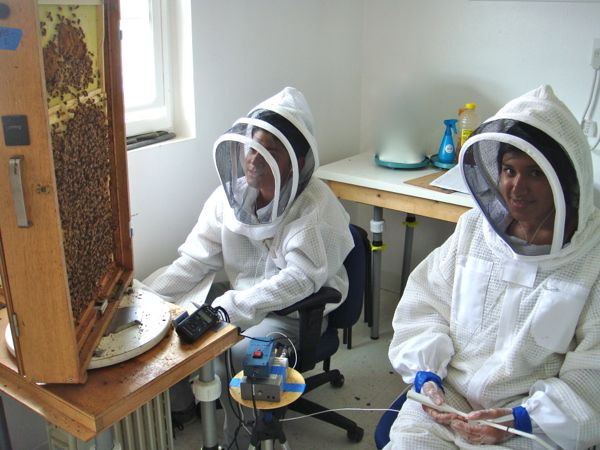
Upward Bound High School students, Andrew Avelino and Monica Mendez studying honey bee foraging communication, focusing on how naturally-elicited stop signals affect foragers waggle dancing for natural food sources (Summer 2013).
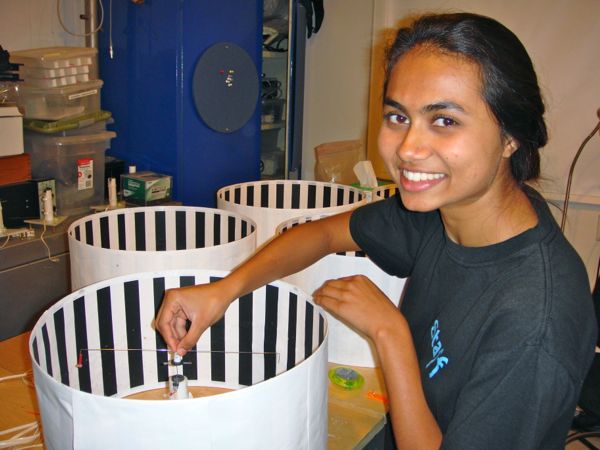
Neha Vaingankar began working in the lab as a high school student in 2011 and is currently an undergraduate at Scripps College, a member of the Clairemont Colleges. Neha is continuing to work in the lab, focusing on the sublethal effects of pesticides on honey bee behavior. (Summer 2013)
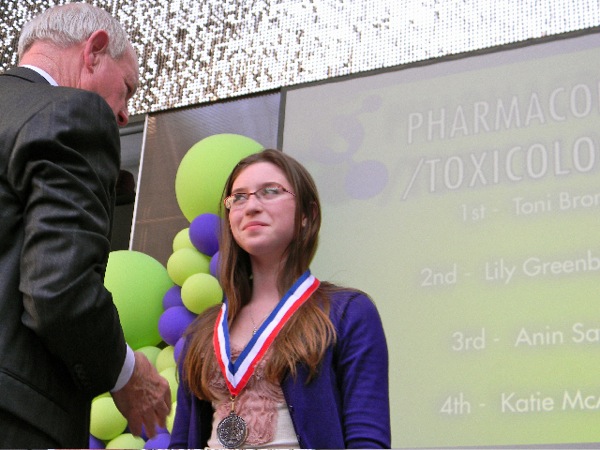
Middle School student, Lily Greenberg-Call, wins second place at the California Science Fair! Daren Eiri is her mentor and is currently completing his Master's degree in the Division of Biological Sciences at UCSD on the effects of imidacloprid on honey bees. To learn more about his research, please CLICK HERE.
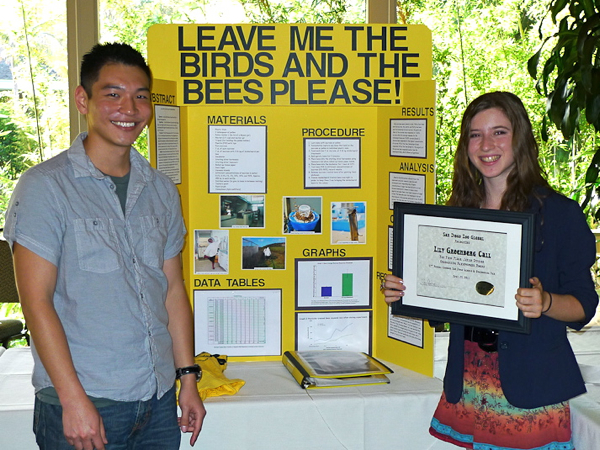
Middle School student, Lily Greenberg-Call, with her poster and first place award for her science fair project (Greater San Diego Science and Engineering Fair) on the effect of the neonicotinoid pesticide, imidacloprid in honey bees. Lily also just received the San Diego Zoo Global Society award and is now competing at the state level with her research project. Daren Eiri (on the left) is her mentor and is currently completing his Master's degree in the Division of Biological Sciences at UCSD on the effects of imidacloprid on honey bees. To learn more about his research, please CLICK HERE.
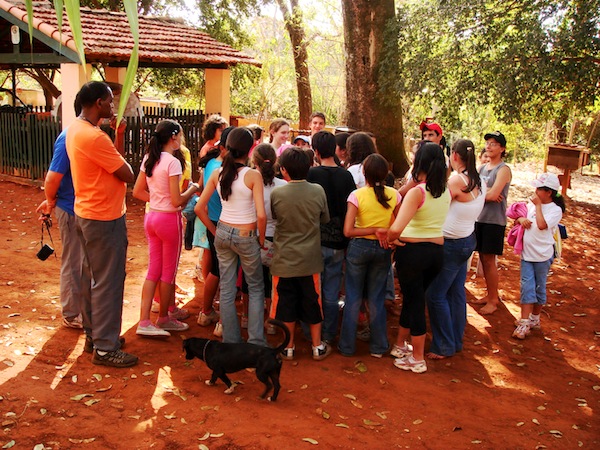
PhD student, Elinor Lichtenberg, talking about native bees to Brazilian students at a ranch where she conducted her research (Fazenda Aretuzina, Bento Quirino, SP, Brazil).
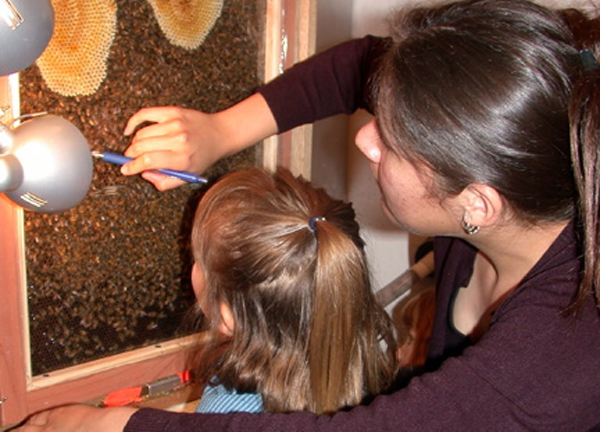
Maria Bernal, former Nieh lab undergraduate mentee in the Opportunities for Research in the Behavioral Sciences Program (ORBS), shows a honeybee observation nest to a visiting kindergarten student from the UCSD Early Childhood Education Center. Maria was a student from Southwestern Community College who helped to conduct research in the Nieh lab.
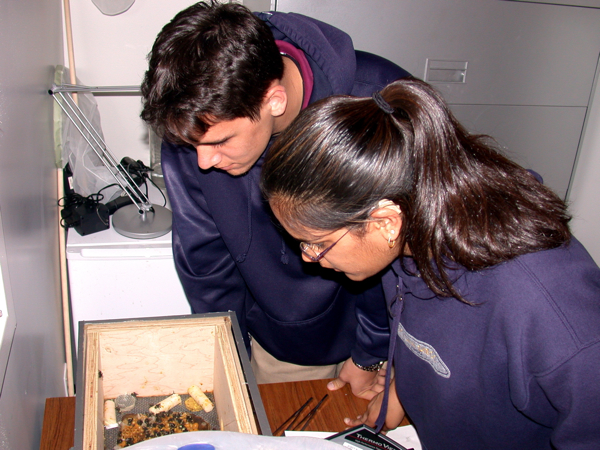
David Iaea and Praschila Mistry, former high school students at the Preuss School, which is dedicated to providing a rigorous college prep education for motivated low-income students. Here they are shown conducting research on the effects of bumble temperature regulation in the Nieh lab.
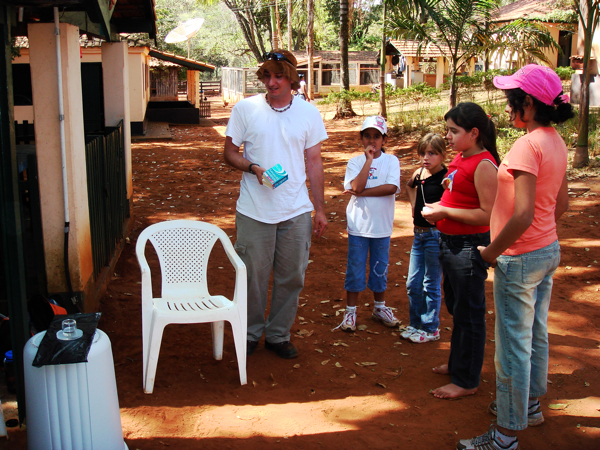
Shawn Kessler, who came to Brazil to conduct research as an undergraduate in the Nieh lab, showing Brazilian students how to train bees to a sugar feeder.
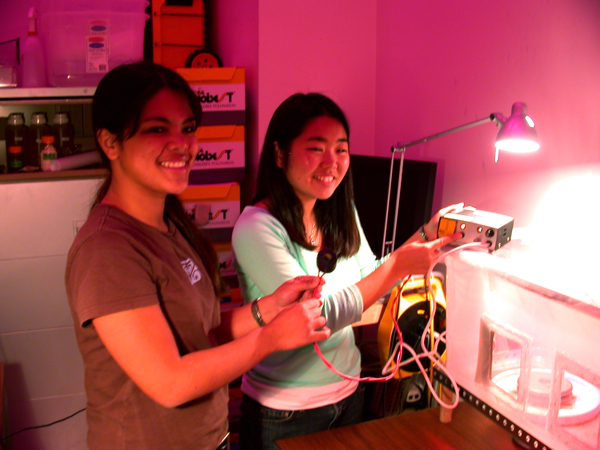
Katherine Maplad (former Master's student in the Nieh lab) conducting her research on bumble bees with an undergraduate researcher, Jennifer Sawada.
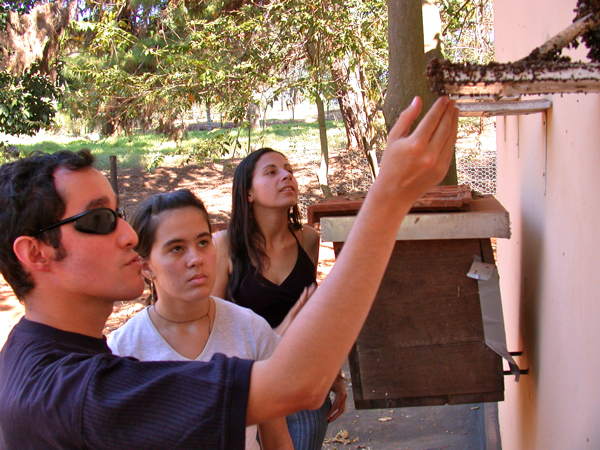
Felipe Contrera, former Nieh lab postdoctoral fellow, showing Brazilian students the outside entrances of stingless bee nests.
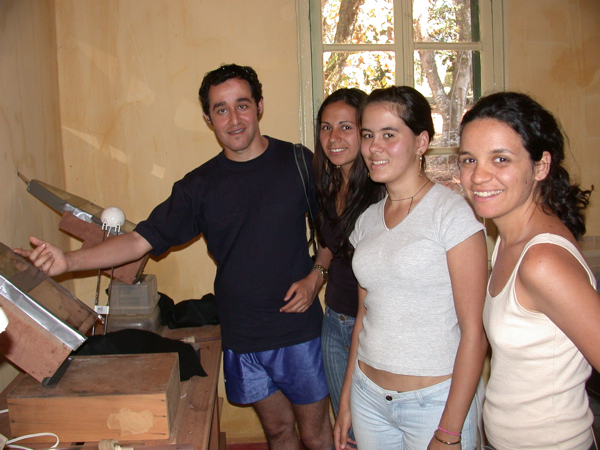
Felipe Contrera, former Nieh lab postdoctoral fellow, showing Brazilian students the observation nests of stingless bees.
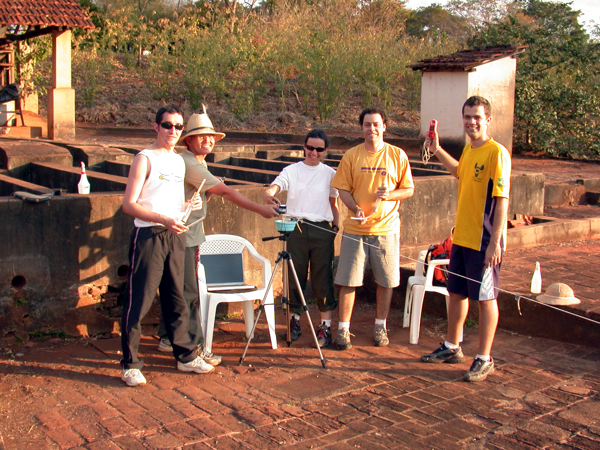
Nieh lab members demonstrating research techniques for studying olfactory communication in stingless bees to Brazilian students from the University of São Paulo.